Our Research Projects
Dr. Trinetta's research interests include the minimization of foodborne illness risk and the investigation persistence and survival of pathogens through the entire food supply chain.
Current projects and Past Projects are shown below.
 |
 |
 |
Current Projects
Modeling the Impact of Weather on Cleaning and Disinfection Strategies to Reduce Pathogen Risk in Swine Transport
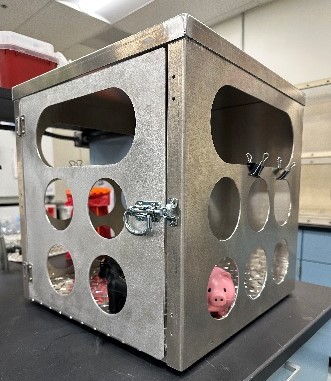 This study aims to enhance biosecurity in the swine industry by evaluating the effectiveness of cleaning and disinfection strategies for trucks and trailers used in swine transport. It investigates novel technologies to combat pathogens such as Escherichia coli, PEDV, and Rotavirus A under various environmental conditions. A risk assessment model will be developed to optimize disinfection protocols based on temperature and geographical factors, providing valuable insights to improve biosecurity and reduce contamination risks.
The study considers two bacterial attachment conditions: planktonic and mature biofilm. Planktonic conditions reflect facilities that frequently implement cleaning and sanitation, as bacteria remain attached to surfaces for shorter periods. In contrast, mature biofilm conditions simulate sporadic sanitation practices, offering insights into their impact on pathogen persistence.
Formation and Control of Single and Dual-Species Biofilms of Listeria monocytogenes and Pseudomonas fluorescens on Food Processing Surfaces
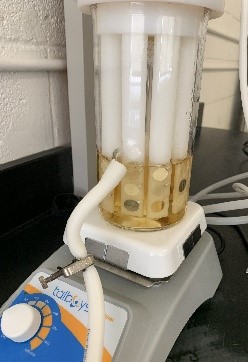 Biofilms are complex microbial structures embedded in an extracellular polymeric substance. Once formed, they become difficult to remove and can persist in food processing environments, posing a risk of contamination. Listeria monocytogenes, a foodborne pathogen with a high fatality rate, can form biofilms both as a single species and in mixed-species communities. Therefore, this project aims to assess the growth of L. monocytogenes alone and in co-culture with Pseudomonas fluorescens on various surfaces representative of food processing facilities, as well as to evaluate the efficacy of sanitizers and ultraviolet light in biofilm removal. Understanding the impact of surface cleanability, topographical, and architectural characteristics on biofilm formation and removal is crucial for developing effective sanitizing strategies in food processing environments.
Mapping microbial diversity and resistome in conventional and antibiotic-free chicken farming and its implications for one's health
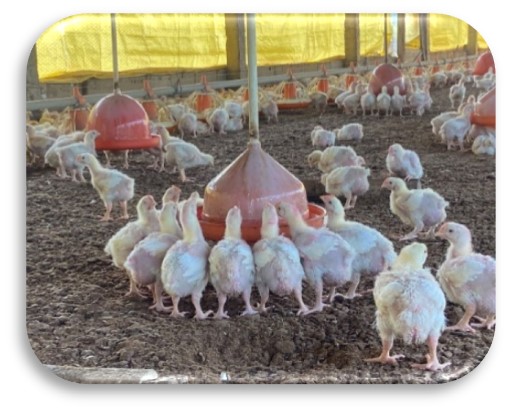 Antibiotic resistance is one of the greatest global public health concerns, and animal food production plays a significant role in the selective pressure on bacteria, particularly in the broiler chicken production chain. A comprehensive epidemiological assessment of antibiotic resistance in this sector requires a One Health approach. In this context, high-throughput DNA sequencing tools have become essential, allowing the identification of antibiotic resistance genes (ARGs) present in a sample (known as the resistome), as well as the detection of microorganisms and other functional genes. This information is crucial for making more effective decisions to mitigate this issue. Emanoelli conducts her PhD research by analyzing the phenotypic and genotypic characteristics of pathogens and environmental microorganisms throughout the food production system, from the beginning of the production chain to the final product.
Novel Sorghum Applications
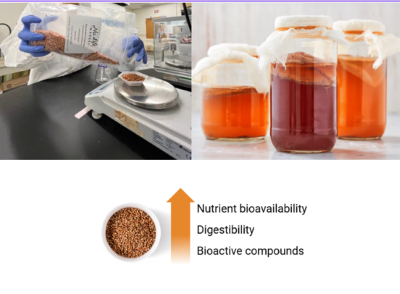
Sorghum is an important global food and feed crop, yet its nutritional value is often limited by naturally occurring anti-nutritional factors that reduce protein and carbohydrate digestibility and impair mineral bioavailability. Controlled fermentation, both submerged fermentation and solid-state fermentation (SSF), offers a promising strategy to enhance sorghum’s nutritional and functional properties.
This research program examines how fermentation reshapes sorghum across multiple product forms. Current work focuses on microbial succession, taxonomic diversity, fermentation dynamics, physico-chemical changes, metagenomic characterization, and chemical composition.
Enhancing Sorghum-Based Hummus with Nanoencapsulated Limonene-Thymol
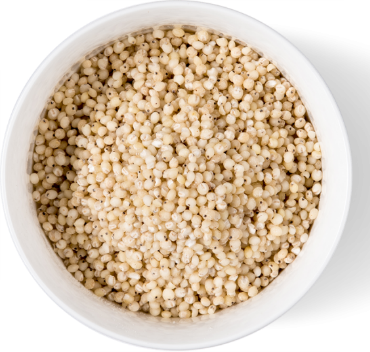
Sorghum, a nutrient-rich and gluten-free grain, has the potential to support food security in Saudi Arabia and beyond. Maddie’s research explores how nanoencapsulated GRAS (Generally Recognized as Safe) compound, thymol, can improve the safety and shelf-life of sorghum-based hummus by controlling harmful pathogens like Staphylococcus, Listeria, and E. Coli. Through the current trials, she has analyzed chickpea, red-sorghum, and white-sorghum-based hummus with each of the unique foodborne pathogens. Exploring how public health intersects with food safety will allow for product optimization and transparency to consumers.
The dolomite problem: a comparison between abiotic and biotic formation pathways
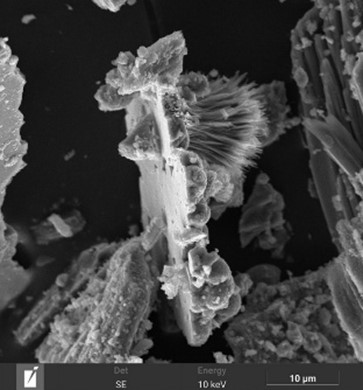 Dolomite is a very common mineral and a rock-forming mineral. In nature, it can be found in a wide variety of environments. It is a key component of ancient deposits, forming large masses of sedimentary rocks (dolomite and dolomitic limestones)geographically and hundreds to thousands of meters thick. Despite its widespread occurrence, dolomite is rarely found in recent sediments and appears to be unable to form at temperatures below 50 °C, even under supersaturated thermodynamic conditions. The phrase “dolomite problem” was introduced to describe a problem that has puzzled generations of scientists for more than 200 years, a unique and unparalleled problem in the natural sciences. Alice conducts her doctoral research by analyzing the factors can promote the formation of calcium and magnesium carbonates, evaluating both inorganic factors such as pH fluctuations, gas-phase interactions, ionic interactions and substrates, and organic factors such as the presence of organic molecules or organisms, paying particular attention to bacterial activity.
Advancing control of device-associated infections in cancer patients: the case of S. aureus, a biofilm streamers
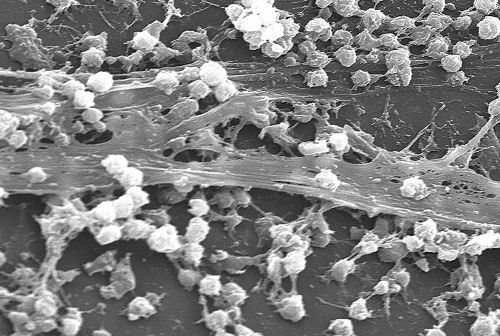 Cardiac implantable electronic devices, such as pacemakers, are essential for treating bradyarrhythmias, preventing sudden cardiac death, and managing heart failure. However, in vulnerable patients, especially those with cancer, Staphylococcus aureus infections are more likely to progress to systemic disease, increasing both mortality risk and healthcare burden. S. aureus is particularly concerning because of its strong ability to adhere to device surfaces and form resilient biofilms. Under flow conditions, such as those found in blood vessels or along implanted leads, these biofilms can develop filamentous “streamers” that resist antibiotics and serve as continuous sources of infection.
This project investigates how flow rate, pacemaker-lead diameter, and human plasma influence the initiation and growth of S. aureus biofilm streamers, structures capable of rapidly colonizing cardiac devices. By determining which combinations of flow conditions, lead dimensions, and plasma concentrations promote streamer formation, this work provides critical insight into biofilm growth kinetics and the mechanisms that drive early device colonization. These findings will help identify predictors of persistent device-associated infections, particularly in vulnerable cancer patients who depend on cardiac implantable electronic devices.
Tracking Biofilms in Food Facilities: How Residues and Sanitizers Impact Microbial Survival
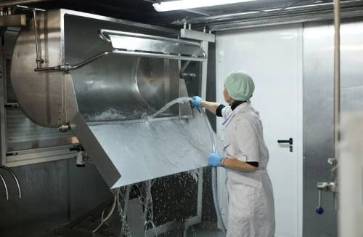 In food processing environments, bacteria can attach to equipment surfaces and form biofilms, complex communities protected by an extracellular polysaccharide (EPS) matrix that makes them harder to remove. These biofilms often contain multiple microbial species and can persist on surfaces such as stainless steel, even after routine cleaning and sanitizing.
This project investigates how food residues from produce, meat, and dairy facilities influence the formation and sanitizer tolerance of these multispecies biofilms. By recreating realistic processing conditions, we study how different soils affect the growth of Listeria monocytogenes, Pseudomonas, and other spoilage bacteria, whether exposure to sub-lethal sanitizer concentrations increases microbial tolerance, and whether rotating sanitizers can improve cleaning effectiveness. To precisely monitor how pathogens survive and persist within these complex biofilms, we use digital PCR (dPCR), a highly sensitive technique that allows accurate quantification of target bacteria even when they are present in very low numbers or in stressed conditions. This approach provides detailed insights into microbial survival and helps guide more effective sanitation strategies.
Some of the Past Projects
Controlling Biofilms on Food Contact Surfaces
Sanitation Strategies for Food Contact Surfaces Common in Fresh Food Markets in Cambodia
Sanitation Practices for Improved Food Safety at Farmers Markets
Improving the Safety of Cambodia's Vegetable Value Chain
Feed Safety and Salmonella Ecology
Improving the safety and quality of leafy greens
Survival of Salmonella in Animal Fat Intended for Pet Food Use
Understanding Listeria monocytogenes Biofilm
Investigation of the prevalence and distribution of Salmonella in feed mills
Antifungal packaging films to control postharvest diseases in strawberries
Biofilms on Food Contact Surfaces
Novel Sanitation Strategies to Control Listeria Biofilms in the Organic Produce Industry
Antimicrobial efficacy to TiO2 against Listeria, Salmonella, and E. coli in microgreen systems