
Spring 2026
From the Program Chair
Alumni and Friends,
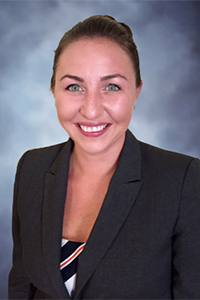
As we reflect on the spring semester, I feel an incredible sense of pride in our faculty, students, alumni, and friends of the program. This newsletter captures so much of what makes the Personal Financial Planning program at Kansas State University special: students representing K-State on national stages, faculty revising coursework that reflects the future of the profession, doctoral students advancing scholarship and practice, alumni leading across the country, and a broader community that continues to believe in our students.
That pride is grounded in what we are seeing our undergraduate students accomplish every day. They are stepping into competitions with confidence, engaging with firms through site visits and networking opportunities, leading student organizations, and applying what they are learning in meaningful, hands-on ways. These experiences are not just resume builders. There are moments when students begin to see themselves as professionals.
Our doctoral students are also making an impact far beyond Manhattan. They are teaching, publishing, presenting at conferences, and contributing to research that shapes our understanding of financial behavior, relationships, and well-being. One of our current students and several of our alumni have recently authored books as well, which is an incredible accomplishment! It is especially meaningful to see them carry the work of financial planning into classrooms, scholarships, and leadership roles across the country and around the world.
The impact of this work is visible across our alumni community. This spring, we surveyed master’s students and alumni and learned that many graduates have recently passed the CFP® exam, launched firms, stepped into executive leadership roles as partners within their firms, earned national recognition, and mentored others as CFP Board Ambassadors. Perhaps my favorite part of the survey responses was that so many describe a shared lesson from K-State: financial planning is not only technical, but deeply behavioral, relational, and human.
Despite all these successes, our faculty continues to move the program forward in thoughtful and important ways. This year, we have revised the master-level coursework to better reflect the complexity of real-world financial planning. Our collaboration with the Institute for Divorce Financial Analysts is creating the first university pathway for both undergraduate and master’s students to pursue the CDFA® designation. We are also strengthening our partnership with The American College of Financial Services, allowing eligible K-State CFP® students and graduates to apply their coursework toward advanced designations such as the ChFC®, CLU®, and RICP®. These efforts help ensure that students graduate with strong technical training, specialized expertise, and clear pathways to continued professional growth.
And behind all of this is a community that continues to show up for our students in meaningful ways. Whether through mentorship, teaching, opening doors for internships and careers, or simply staying connected, that support makes a difference. It reminds our students that they are entering a profession that values both excellence and care.
Looking across these stories, I am reminded that what makes this program special is not any one accomplishment, but the consistency of our culture. It is a community that believes in developing professionals who are not only skilled but thoughtful, empathetic, and prepared to make a meaningful impact.
Thank you for being part of this work and for helping shape the next generation of financial planning professionals. As part of the K-State family, we succeed because we show up for one another, believe in our students, and carry Wildcat pride into the future.
Go Cats!
Megan McCoy, Ph.D., LMFT, AFC®, CFT™
Program Chair, Personal Financial Planning
Kansas State University
Program Updates
Celebrating a whirlwind of a semester!
From student competitions and campus engagement to graduate curriculum growth and faculty accomplishments, this year’s updates reflect the energy and momentum across K-State Personal Financial Planning. Read on to celebrate the students, faculty, and partners helping move the program forward.
Graduation
A number of our Master’s graduates made the trek to the Little Apple on Friday, May 15, with several stopping by the PFP suite for photos and donuts with faculty. The excitement and magnitude of this achievement were on full display—along with plenty of smiles, pride, and well-earned celebration.
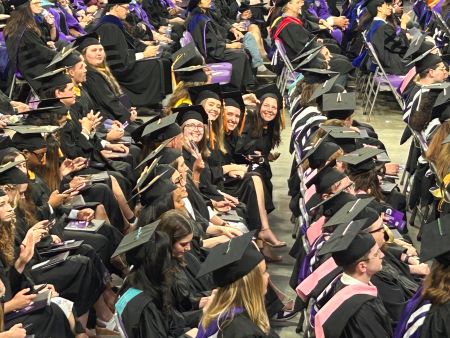
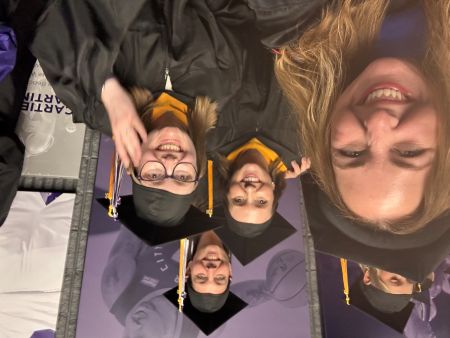
The undergraduates who have spent four years with us completed that final walk into the next chapter on Saturday, May 16. This time of year is always bittersweet, as we have grown quite attached to each cohort by this point, but the future they all have will truly be something to watch.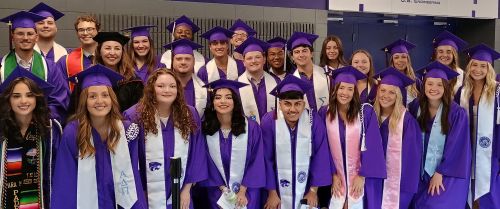
Proof that caffeine, deadlines, and determination really do pay off… Congratulations to all of our graduates!!
Conferences/Competitions
On February 22, 2026, Katie Dinkel and Leah Meek set sail aboard the Independence of the Seas to compete in the Financial ConNEXTion Career Exploration Competition. Students had to interview at least eight professionals in two financial-sector careers and then submit a paper addressing topics such as income, opportunities, flexibility, work-life balance, career growth, and a sense of meaning. Katie and Leah were selected as one of five finalists out of approximately 30 universities that participated in the competition. The final part of the competition, an oral presentation on their paper, was held at sea. Katie and Leah placed, earning each of them a $750 scholarship!
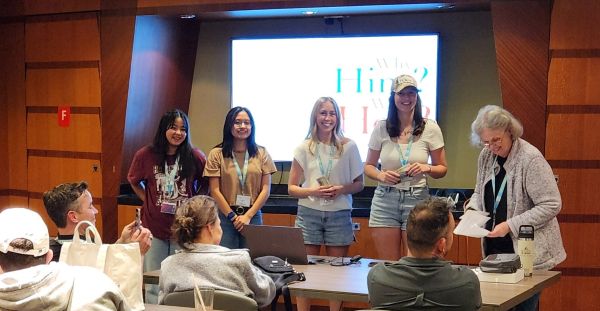
Prior to boarding, Katie and Leah also participated in the Financial ConNEXTion Job Pitch Competition. In this competition, each student had three minutes to answer the question, “Tell me about yourself and what skills you bring to the table for a prospective employer?” The girls crushed this competition, tying for first place and pocketing another $250 each for their efforts.
We’ve got our eyes already on next year’s prizes. K-State will again be participating in the FPA Financial Planning Challenge and is pleased to announce that Avery Stephany, Tanner Werth, and Katelyn Wilson will comprise our team. Steve Levitt will be the Faculty Advisor for this challenge. And seeking to retain the national title won by last year’s AFCPE team, Brynna Wilson, Abby Woods, Matthew Lierz, and Drew Tatum will be competing to return to the stage at AFCPE in the fall of 2026. They will be making a video on counseling and financial literacy and completing a case study in which they solve client issues. Only three teams are invited to the Knowledge Bowl, so we wish these top students luck as they begin their adventure to recapture glory for K-State and our PFP program!
Engagement
Students Attended the FPA Mini-Gathering in Kansas City, Spring 2026: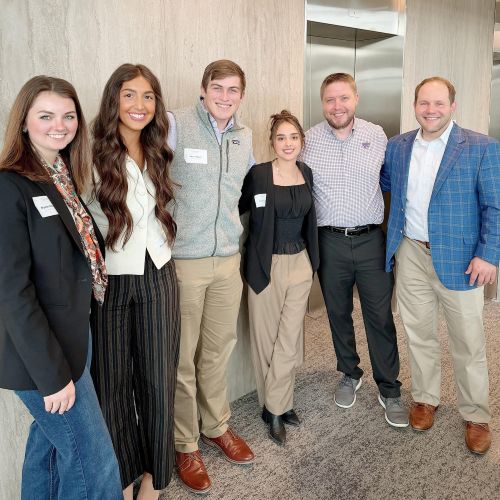 One of our goals within the Personal Financial Planning program is to be more intentional about connecting students with the professional communities they may one day serve. We are continuing to strengthen our relationships with the Financial Planning Association of Greater Kansas City and FPA Kansas so students can begin building meaningful professional networks while still in school. We had a wonderful start this year with four students attending the FPA Mini-Gathering in Kansas City, where they had the opportunity to connect with NexGen advisors from across the country while gaining valuable education, resources, and insight into the profession. The experience provided students with both practical knowledge and a stronger sense of community within financial planning. But don’t just take it from us, several students in attendance offered their thoughts on this experience:
Brynna Wilson, Senior (Dec. 2026 Graduate)
Connect with Brynna via LinkedIn.
"I really liked the session that talked about all the resources that FPA provides to its members. They have a lot of valuable resources that I didn't even know were available, like the Journal of Financial Planning and the FPA competency models."
Drew Tatum, Senior (Dec. 2026 Graduate)
Connect with Drew via LinkedIn.
FPA at K-State Wraps Up an Incredibly Busy and Successful Semester:
The semester kicked off with a strong turnout: FPA hosted roughly 80 students at the kickoff event, where they highlighted upcoming opportunities. Throughout the semester, the group hosted Grant Steffes, CFP®. He provided a candid talk on aspects of financial planning that often go undiscussed—including navigating imposter syndrome and tackling ethical dilemmas in the field.
The highlight for many was the glitzy “mocktail” networking event, which brought in 7 local Edward Jones representatives. Students and professionals mingled while learning to muddle drinks and discussing the deep meaning and purpose behind financial planning, as well as its real-world challenges.
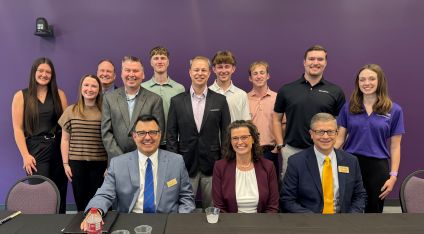
A high note towards the end of the semester was three trips to Kansas City, where students visited more than 10 firms, explored the area, and spent quality time together. Completing the year by hosting an end-of-semester celebration and send-off to graduating members.
Exciting News From Invest-A-Cats:
Invest-A-Cats is a student-run campus organization designed to provide students with "hands-on" experience in constructing and managing an investment portfolio. Invest-A-Cats had an exciting spring, starting with the American Century Field Trip.
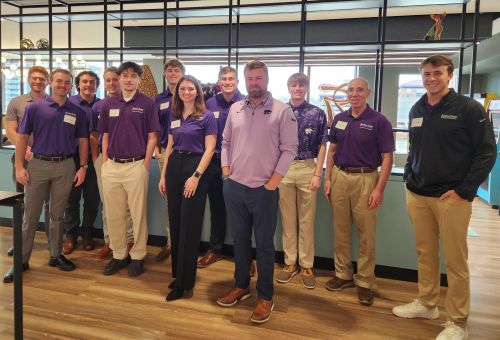
On March 24, 2026, an Invest-A-Cats team led by Faculty Advisor Steve Levitt and comprised of Joseph Lawton, Evan Lenherr, Andrew Willson, Drew Tatum, Ethan Burnett, Justin Kruchten, Tanner Werth, Brynna Wilson, Rayce Vega, and Preston Lee made a trip to American Century Investments in Kansas City, MO.
The trip included a brief tour of American Century's headquarters, a discussion on trading with David Riekhof, Vice President and Senior Trader, a brief overview and history of American Century, a career panel comprised of various KSU alumni currently working at American Century, and finally, a working lunch session with Ryan Cope, Vice President and Portfolio Manager, who manages two American Century value funds.
The day offered the team a wonderful opportunity to learn, network, and continue its journey of investment knowledge. A HUGE thank you to Lauren Gebhardt, Susie Morris, and Rachel Gessley for hosting us and making this event possible!
The Invest-A-Cats Student Scholarship:
Invest-A-Cats is also pleased to announce the creation of The Invest-A-Cats Student Scholarship. Beginning in Fall 2026, the organization’s intent is to issue a $1,000 scholarship each semester to help defray college costs. The scholarship will be funded from the income generated by the organization’s investment portfolio. Thus, the organization intends to begin fundraising to increase the size of the investment portfolio. The more assets under management, the more income the investment portfolio can generate. By generating more income, the organization can increase both the number of scholarships issued and/or the scholarship dollar amount over time.
Adding the fundraising component provides students with real-world sales experience and helps them develop and refine their verbal presentation skills. Increasing the size of the investment portfolio will allow students to increase the number of securities owned and explore new asset classes for purchase. The students are ecstatic about the organization’s future and direction and are not shy about asking for your financial support. If you would like more information on how you can help, please contact Faculty Advisor Steve Levitt.
Invest-A-Cats is also pleased to announce its new officers for the 2026 – 2027 academic year:
Congratulations to Tanner Werth (Chief Executive Officer), Rayce Vega (Chief Investment Officer), Evan Lenherr (Chief Financial Officer), and Justin Kruchten (Secretary)!
Olathe
We currently have 39 active students at Olathe. We do have a handful of graduates this spring, so that will drop initially, but we anticipate additional enrollment for summer and fall 2026. More likely than not, we will top 40 for the first time at Olathe going into the fall.
One of our Olathe graduates, James Watts, passed the CFP exam during the March testing window. He is the first student to take the exam from Olathe, as he was part of the first group to graduate back in December 2025.
Our new faculty includes Jack Giardino, Blaise Heckman, and Jordan Priddy. All three are K-State PFP alumni; all three hold the CFP designation, and all three practice at firms in the KC area. We are very lucky to have a group this talented to help guide our students in Olathe.
Masters
The master’s program also continues to grow in exciting ways that better reflect the complexity of real-world financial planning. This year, the growth is especially evident in four important initiatives that are expanding how we prepare students for the profession.
First, is a meaningful collaboration with the Institute for Divorce Financial Analysts (IDFA) that helped us create the first university pathway toward the Certified Divorce Financial Analyst (CDFA®) designation. This partnership reflects our continued commitment to preparing students for the complex financial and relational issues they will encounter in practice. As part of this effort, our Money and Relationships course will be enhanced to include additional content on the emotional consequences of divorce. At the same time, we are developing a new elective focused on the financial implications of divorce and the issues financial planners should understand when working with individuals and families navigating this transition. Although the initial emphasis will be on graduate education, the course will be cross-listed to allow undergraduate students to enroll, as well. We are especially proud that our own Mindy Brandon-Joseph, Ph.D., is currently working toward her CDFA® designation.
Another important area of growth is within the advanced curriculum, where we are redesigning courses to emphasize integrated decision-making rather than treating each area separately. This helps students better understand how tax, estate, and retirement strategies work together in practice and prepares them to think more comprehensively when serving clients. We have also strengthened the retirement planning course by expanding its focus on Social Security.
Finally, there is an expanded emphasis on technology in both the undergraduate and graduate Capstone courses. Students are introduced to three leading financial planning software platforms: eMoney, RightCapital, and MoneyGuidePro. After several weeks of hands-on analysis, they compare all three and select one to use throughout the remainder of the course. Students also evaluate six additional technology tools that support other aspects of practice, including client relationship management, investment management, and business operations. This gives them the opportunity to think critically about practice management and identify the tools that best fit the kind of firm they hope to build or join.
Doctoral
Our doctoral students have had an exciting and impressive year, and we are proud to celebrate the many ways they are contributing to the field through research, leadership, and professional achievement.
This spring, our students will represent the program on the national stage through conference presentations that reflect both the depth and relevance of their scholarship. At the ACCI conference, doctoral student Mo Buckner will present “Generational Differences in Emergency Fund Saving: An Analysis of Demographic, Economic, and Predictive Behavioral Factors Among Millennial and Generation X Households,” with Dr. Mindy Joseph. At the Financial Therapy Association conference in Austin, doctoral students Jared Cornelius and Joanne DeVille will present “Who Works with Financial Professionals? Insights into Financial Help-Seeking Among Economically Capable Adults,” alongside Dr. Yu Zhang.
Our students are also making an impact beyond conference sessions. Thomas Crandall is partnering with colleagues in Minnesota to help relaunch Jump$tart Minnesota, contributing to important efforts to expand financial education and outreach. Donovan Sanchez has continued to share research-informed insights with broader audiences through podcast appearances this year, including The Model Wealth Podcast, where he discussed topics such as financial resolutions and market volatility in ways that make academic ideas more accessible and useful in practice.
We are especially proud of Khurram Naveed, our outstanding doctoral student this semester, whose co-authored article, “Stock Market Index Overconcentration,” was published in The Journal of Wealth Management. The piece has already drawn additional attention in practitioner spaces, a wonderful example of the kind of work that bridges academic research and real-world application.
We are also thrilled to celebrate Jay Sexton, who published his first book, "Bleeding for Ghosts", and received a Fidelity Investments CFP® Exam Scholarship.
We could not be prouder of our doctoral students. Their work continues to strengthen the profession, advance scholarship, and reflect the heart of what makes this program so special.
Faculty Updates
Dr. Kate Mielitz previously held a shared position with Powercat Financial and the personal financial planning program but has officially joined the PFP faculty full-time as a Professor of Practice, effective Fall 2026. Dr. Mielitz has over 27 years of experience in the financial services industry, including work in Collections, Bankruptcy, Fraud, Financial Education, and Financial Counseling. She earned her Ph.D. in Personal Financial Planning from Kansas State University in 2018.
Kate transitions into the full-time faculty role after serving as Executive Director of Powercat Financial for 2 years and supporting the PFP program by teaching one class per semester over the past year. Though she found success leading Powercat Financial by expanding programming across campus and further strengthening her skills in strategic planning, supervision, and leadership, she feels called to be more directly involved in shaping the future of financial planning, counseling, and education through more focused work with students. As the 2020 awardee for the Mary Ellen Edmonson Financial Educator of the Year from the Association for Financial Counseling and Planning Education (AFCPE®), we are excited to welcome Kate as an established and well-regarded instructor into her full-time role.
Student Spotlight
Jordan Hofmann, CFP®
Pursuing M.S. in Personal Financial Planning
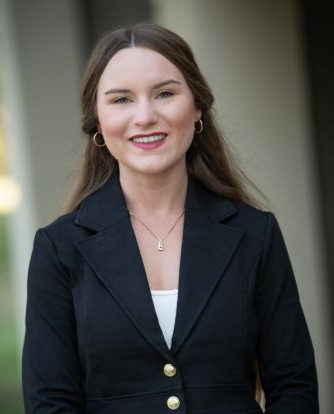
Our Spring Student Spotlight features an exceptional graduate student whose journey reflects resilience, purpose, and a deep commitment to service. This season, we highlight a Personal Financial Planning student who has combined professional achievement with personal perseverance, all while representing the K-State PFP program with integrity and heart.
In this edition, we spotlight Jordan Hofmann, a CERTIFIED FINANCIAL PLANNER™ professional pursuing a master’s degree in personal financial planning, along with graduate certificates in financial therapy and advanced financial planning. Jordan’s path to Kansas State University is rooted in a lifelong dedication to helping others, shaped by early lessons in financial responsibility, profound personal loss, and a passion for creating lasting change through both financial knowledge and emotional understanding. Her story offers a powerful glimpse into how compassion, grit, and purpose intersect within the K-State PFP community.
I am Jordan Hofmann, a CERTIFIED FINANCIAL PLANNER™ professional pursuing a master’s degree in personal financial planning with graduate certificates in financial therapy and advanced financial planning. I’m humbled to share my story and how I became a student at Kansas State University.
Growing up, I watched my mom strategically make ends meet as a single mother, all while devoting her life to serving those in need. She struggled financially, but somehow still always had something to give, be it a delicious home-cooked meal or her time through volunteer efforts. Though we didn’t have much, my mom empowered me to pursue my own financial independence. When I was fifteen, I had the opportunity to visit New York City. I got my first summer job as a restaurant hostess and saved up enough money to travel and see a Broadway musical. At sixteen, I got a job at Wal-Mart, and my mom was so proud of me for having a 401k – something she was never able to contribute to for herself.
When I was a senior in high school, deciding what career to pursue, my main goal was to find a path centered around helping others; a core value my mom instilled in me. I considered becoming a counselor, but at the time, I wasn’t sure I wanted to commit to the extensive schooling and licensure required to work in the mental health field. I also recognized that budgeting had become a notable strength of mine, and after reflecting on my mom’s hardships, I realized a career in wealth management would allow me to positively impact the quality of life of others by teaching financial literacy.
I completed my undergraduate degree in finance in 2023, but it was not an easy journey. On March 19th, 2022, my mother passed away unexpectedly. The grief was all-encompassing, and the sudden responsibilities before me were overwhelming. Many of my professors encouraged me to take incompletes, but I was determined to stay on track and not delay the plans I worked so hard to build. With the help of Christ, I was able to heal from the loss of my mother while finishing college and completing an internship.
My grit paid off when I joined SYM Financial Advisors. The firm has been invaluable to my professional development by supporting me in earning the CFP® designation and by giving me the opportunity to fulfill my dream of promoting financial literacy by presenting at the firm’s Women’s Education Initiative. I once mentioned to our Chief Investment Officer that I had considered becoming a counselor. He introduced me to the Kansas State program, and discovering financial therapy felt like the ideal intersection of my counseling interests and my financial planning work. I was intrigued by the field of financial therapy, and with his advocacy and encouragement, I was able to enroll.
One of the most valuable insights I’ve gained from the K‑State program is realizing that simply providing financial knowledge isn’t enough to create the impact I hope to make. Financial literacy alone doesn’t guarantee lasting change, as much of the information shared may not be fully retained or applied. What truly creates meaningful transformation is helping clients understand themselves more deeply and walking alongside them as they explore their emotions, behaviors, and patterns surrounding money.
The Money and Relationship course, taught by Dr. Megan McCoy, along with the Intro to Financial Therapy course, taught by Dr. Meghaan Lurtz, has provided a foundation for how I will interact with clients. I’ve learned real strategies and effective methods to help ensure my clients feel heard and supported in making constructive changes within their lives. The courses taught me skills that have fostered growth in both my personal and professional life. For instance, the K-State program prompted me to reflect on my own money history and identify the money scripts that have shaped my financial beliefs. Gaining this awareness has been incredibly beneficial, allowing me to better understand my clients’ experiences while recognizing how my own background influences the way I support them.
I appreciate the hands-on experience the program provides through role‑playing scenarios, group projects, and insights from active practitioners who join us as guest lecturers to demonstrate the concepts we’re learning in class. While it is an online program, I’ve been very pleased with the live office hours, as they’ve allowed me to interact with my professors and build meaningful relationships with my cohort. It has been wonderful to share our experiences and learn from one another as we study.
Beyond the financial therapy coursework, Dr. Justin Henegar’s Professional Practice Management class has been especially enriching. The course provides a comprehensive look at what it takes to operate a financial planning firm, covering everything from management and organizational structure to valuation methodologies. It offered a valuable behind‑the‑scenes perspective that deepened my appreciation for the decisions made by leadership at my firm. As someone interested in future ownership, I found the practical lessons from this course particularly beneficial.
Every class in the program has equipped me to better serve my clients. I’ll be forever grateful for the opportunity to further my education and expertise and I’m excited to carry these lessons forward as I continue growing in my career. In all I do, I hope to carry my mom’s legacy forward by devoting my career to serving others with the same kindness, resilience, and selfless spirit she had.
Connect with Jordan on LinkedIn.
Then and Now: Celebrating 75 Doctorates
Reflecting on the people, progress, and purpose behind 75 K-State PFP doctoral graduates.
Milestones invite reflection, not only on numbers but also on the stories behind them. As the Kansas State University Personal Financial Planning (PFP) PhD program celebrates its 75th doctoral graduate, this moment offers an opportunity to look back at where the program began and to consider where it is headed. The journeys of the first graduate, Dr. Julie Cumbie (2012), and the 75th graduate, Dr. Nathan Collier (2025), together tell a powerful story of vision, growth, and enduring purpose.
The Beginning: Laying the Foundation
When Dr. Julie Cumbie entered the PFP PhD program, it was still finding its footing. At the time, she was teaching as a temporary full-time professor in the Department of Finance at the University of Central Oklahoma and knew that earning a PhD was essential to becoming a full-time, tenure-track faculty member.
“I wanted to incorporate financial planning courses in the department,” she explains. “Pursuing a PhD in Financial Planning would allow me to achieve my goals.”
As the program’s first doctoral graduate, Dr. Cumbie experienced the full weight of building something new. Coursework, comprehensive exams, and developing a research agenda all came without a clear roadmap. Success required focus, persistence, and a willingness to keep going when the path was uncertain. Support from faculty and her cohort played a central role, helping establish a culture of professionalism, mentorship, and shared commitment that continues today.
Her proudest moment came at graduation, when she was hooded as the program’s first doctoral graduate. It marked not only a personal milestone but also the beginning of the program’s legacy.
That moment carried forward into her career. After earning her PhD, Dr. Cumbie became a tenured, full professor, established a Financial Planning minor, and helped develop a CFP Board–registered program. Her work expanded access to financial planning education and strengthened the profession, reflecting the program’s early commitment to impact in both academia and practice.
Seventy-Five Graduates Later: A Program Comes of Age
More than a decade later, Dr. Nathan Collier became the 75th PhD graduate, representing how the PFP PhD program has evolved while remaining true to its original purpose.
Dr. Collier was drawn to the program by its flexibility and depth. After completing his CFP® prerequisite coursework through K‑State, he intentionally chose a path that would allow him to pursue a PhD without relocating or putting his career on hold.
“The biggest win was accomplishing my educational goals while continuing my career without uprooting my family,” he shares.
By integrating CFP® coursework, an MBA, and PhD requirements, the program allowed him to progress efficiently and intentionally, an example of how the program has adapted to meet the needs of working professionals while maintaining academic rigor.
A Culture of Community and Mentorship
Despite the program’s growth, one constant connects past and present: culture.
Dr. Cumbie recalls faculty who were deeply invested in student success. Dr. Collier experienced that same commitment, noting that many faculty members are program alumni themselves and understand exactly what students are going through.
The cohort model, now firmly established, further strengthens that culture. “You spend a major part of your life with your cohort for three to four years,” Dr. Collier explains. These relationships provide accountability, encouragement, and perspective at every stage, from coursework to dissertation.
Rigor That Shapes Scholars
Both graduates point to the program’s academic intensity as a defining feature.
Dr. Cumbie remembers the combined challenge of coursework, comprehensive exams, and developing her research identity. Dr. Collier identifies his dissertation, bringing theory, interests, and structural equation modeling together, as the most demanding part of his journey.
In both cases, mentorship made the difference. Faculty guidance, collaborative problem-solving, and sustained encouragement helped transform challenges into scholarly growth.
Pride, Purpose, and Professional Impact
For Dr. Cumbie, pride was standing at graduation as the program’s first success story. For Dr. Collier, it was completing the program in just three and a half years, through consistent goal-setting and incremental progress.
Their careers reflect the program’s reach. Dr. Cumbie advanced into tenured faculty leadership. Dr. Collier continues his work as a financial planning practitioner while teaching in the Master’s in Financial Planning program at Whitworth University and contributing as a published researcher. Both embody the program’s dual impact, advancing scholarship while strengthening professional practice.
Then. Now. Next.
Neither graduate is surprised by the program’s success. Demand for highly trained financial planning professionals and PhD-level educators continues to grow, and the PFP PhD program has remained focused on quality, structure, and research excellence.
Dr. Cumbie hopes future milestones will represent “a continuation of quality professionals being placed in industry and academia.”
Dr. Collier hopes they reflect a culture of “incremental improvement, discovery, and personal development.”
From one graduate to seventy-five, the story of the K‑State PFP PhD program is ultimately about people, those who took a chance on a new idea, those who refined and expanded it, and those who will carry it forward. Together, these graduates remind us that progress is built one scholar at a time.
Notable Research
Exploring how peer financial counseling and formal education shape college students’ financial behaviors, confidence, and well‑being
As a financial planner and educator, Dr. Rollins-Koons is passionate about helping people become more financially literate and confident in their financial decision-making abilities. In an upcoming article in the Journal of Financial Counseling and Planning, Dr. Rollins-Koons, along with coauthors Dr. Kenneth White, Dr. Megan McCoy, and Dr. Kate Mielitz, examines the impact of peer financial counseling, an often underexplored approach in financial literacy research. Using national college student data, the study shows how combining structured financial education with peer support can strengthen financial behaviors, confidence, and optimism, offering important insights for colleges seeking to better support student financial well-being.
Financial education and positive financial management
One of the ultimate goals of increasing financial literacy is improving financial behaviors. The results indicated that taking a financial education class and/or engaging in peer financial counseling either during or before college was associated with better financial management behaviors. Peer counseling alone had a stronger association with behaviors than classes alone, highlighting the important role peers play in influencing each other’s financial behaviors. This suggests that while knowledge matters, having someone to talk through decisions with can make that knowledge more actionable.
Financial education and financial self-efficacy
Financial self-efficacy, or the confidence in one’s ability to make financial decisions, was positively associated with financial education classes. Moreover, combining classes with peer counseling further strengthened this relationship. However, peer counseling alone was not significantly related to self-efficacy, which suggests that peer support may need to be paired with foundational knowledge to build confidence.
Financial education and financial strain
The relationship with financial strain was more complex. Taking a financial education class alone was associated with less financial strain; however, peer counseling, whether in isolation or in combination with a financial education class, was associated with greater financial strain. While peer counseling may not always alleviate the stress and worry often associated with personal finance, in some ways, this may be a good thing. Recognizing unhealthy financial habits could result in additional financial strain, which could increase awareness and prompt students to take action. Ensuring that students have support to address the stressors that are causing strain is critical for their well-being.
Financial education and financial optimism
Students who participated in financial education, especially when combined with peer counseling, were more optimistic about their financial futures. However, peer counseling alone was associated with slightly lower optimism, again pointing to the importance of pairing support with structured learning.
Financial education and financial knowledge
When it comes to financial knowledge, traditional education stood out, with classes alone being linked to higher financial knowledge scores. In theory, peer counseling could provide a necessary supplement to traditional coursework, helping students apply knowledge and engage in collaborative efforts to solidify the lessons they learn. However, in this study, peer counseling was associated with lower financial knowledge scores when it was provided without a formal financial education class. This suggests the need for structured training for peer counselors to ensure that students are receiving accurate financial advice.
Overall, the findings suggest that colleges may get the best results by combining both approaches. Structured financial education can help students build knowledge and confidence. Pairing this traditional education with a robust peer counseling program can help students apply what they’ve learned in real-time, bring awareness to financial problems, and engage in healthier financial behaviors.
If interested in learning more, you are welcome to email Dr. Ashlyn Rollins-Koons, CFP®, and Professor of Practice.
More Than a Degree
Katie Dinkel and Leah Meek, undergraduates, who are making their college experience truly meaningful
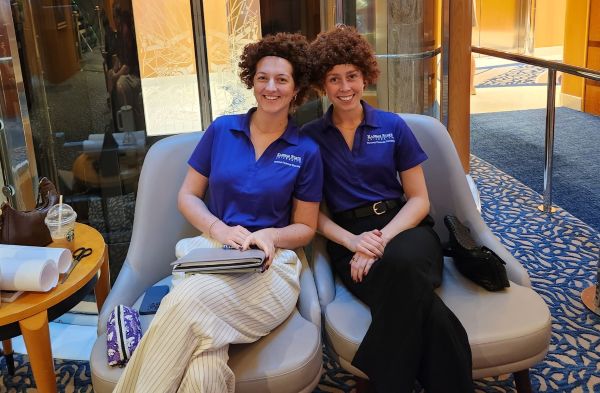
College becomes meaningful through the opportunities students choose to pursue and the people they grow alongside. For personal financial planning students Katie Dinkel and Leah Meek, this year was defined by experiential learning beyond the classroom—ranging from national competitions and professional travel to campus leadership and community engagement. Through hands‑on challenges, mentorship, and meaningful connections, they discovered that intentional involvement not only strengthens professional readiness but also creates lasting friendships and a sense of purpose. Their journey is a testament to how experiential education shapes confident, well‑prepared future leaders in financial planning.
College, in our experience, is as meaningful as you choose to make it. We are Katie Dinkel and Leah Meek, undergraduate students pursuing degrees in Personal Financial Planning. This past academic year has been influential not only in the classroom but with the applied learning opportunities we’ve had through extracurriculars.
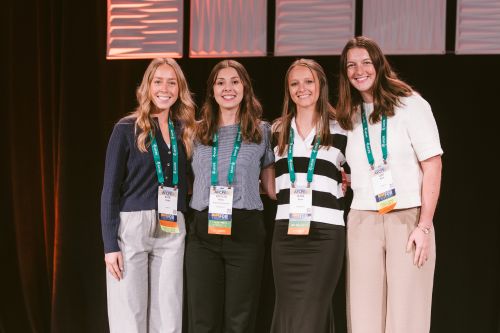
Last spring, we both accepted spots on Kansas State’s Association for Financial Counseling and Planning Education (AFCPE) team. Over the following months, we prepared alongside our teammate, Alivia Kaiser, and team captain, Katelyn Wilson. When November arrived, it was time to put our preparation to the test. Our team traveled to Arizona with our coach, Dr. Blake Gray, to compete in the Knowledge Bowl Competition against Texas Tech University and Utah Valley University. After a full day of educational sessions, we took the main stage to compete and brought home first place after an intense debate over the definition of a springing power of attorney. If we didn’t know what that was before, we certainly do now.
In the middle of preparing for AFCPE, we decided to add one more challenge to our plates—and it didn’t take much convincing. When we received notification about a cruise competition, we eagerly decided to go for it (because who wouldn’t?). With obligations to AFCPE, PCE, classes, and everyday life, it was no wonder our instructor, Steve Levitt, was skeptical of us taking on one more responsibility. Over the next month, we dedicated much of our free time to interviewing professionals working in financial advising and financial counseling. Using their perspectives, we wrote an essay titled “Money Doesn’t Grow on Trees—But These Careers Help Your Finances Flourish,” which highlighted both the similarities and differences between the two fields. In November, we received the exciting news that we had advanced to the next stage of the competition—earning the chance to present our work to a panel of judges while cruising through the Caribbean.
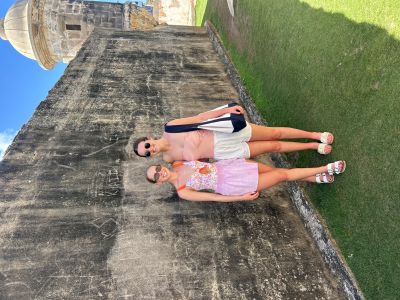
We immediately got to work brainstorming how to impress the judges. After several Zoom calls over Christmas break and more than a few returns to the drawing board, we realized financial planning and counseling is truly an art form, so a Bob Ross-themed presentation felt like the perfect fit. In February, we packed up our suitcases (double-checked we had our Bob Ross wigs) and set out to present “The Art of Financial Service Careers”. Alongside the presentation, we each gave elevator pitches: Katie shared how golf inspired her path into financial planning, while Leah discussed how her passion for gerontology connects to her studies. Although our final placement wasn’t what we hoped for, we embraced the experience and enjoyed the white sand beaches of the St. Thomas islands, enjoyed a drink with our newfound friends from Texas Tech and Texas A&M in San Juan, and explored the city of Nassau.
The professional connections we made over the past year have proved incredibly valuable, offering more guidance and insight than we ever expected. Once the work was done, the fun began! Evenings were filled with lively discussions over dinner with the other students and professionals. After listening to some amazing – and not so amazing – karaoke singers, our group headed to the dance floor, where an 80-year-old taught us how to bust a move.
Outside of these excursions, both of us have stayed busy with full calendars beyond the classroom. Not because we felt pressured to build résumés, but because so many meaningful opportunities were right at our fingertips—and time feels fleeting when you’re having fun. As our friendship grew stronger, we made it a point to take full advantage of road trips each semester to firm visits in Kansas City. These experiences gave us a better understanding of how firms operate, their cultures, and their procedures. The car rides themselves turned a school friendship into a lifelong friendship (for those of you hiring – we work great together), with a few bonus trips to Trader Joe's since Scandinavian Swimmers, Crunchy Curls, or Trader Joe's Peanut Butter Cups are nowhere to be found near the Little Apple.
Back in Manhattan (still without a Trader Joe's), we continued learning lots from our monthly Zoom meetings with our mentor and found genuine joy in spending time with peers at FPA events, many of whom quickly became good friends. One of the biggest lessons we learned this year was the value of incorporating our passions into as much of our day-to-day as possible – adding a lot of meaning to life. We both have leaned into that mindset more than ever during our junior year.
Leah has poured into her Greek life community by serving her sorority as Chapter Life Vice President. This role has allowed her to build connections in the way she loves most: through planning social events! From formals to sisterhood events to date parties, she has relished the opportunity to curate memorable experiences for her chapter. When that role wrapped up in November, still feeling ambitious as ever, Leah stepped into the position as a member of the Panhellenic Council. Although Leah didn’t get her first pick of position, she accepted a role with a grateful heart and has found it deeply rewarding to serve as the Vice President of Health and Safety for all Kansas State sororities.
Meanwhile, Katie continued to spend her Tuesday and Thursday afternoons volunteering as an assistant coach for Girls on the Run, mentoring girls in third through fifth grade. Over the last year, she has had the privilege of teaching the girls lessons centered on confidence, kindness, and perseverance. What Katie initially thought would be a simple volunteering opportunity quickly became an organization close to her heart. While Katie carried the title of “coach,” it was the girls who ultimately taught her just as much, especially how to take herself a little less seriously and find the joy in the small moments.
 Looking back over this past year, it truly feels like a whirlwind. While time flew by, the experiences and applications will last a lifetime. We often hear that “college is the best years of your life,” but it is the opportunities you choose to pursue that make it true or not. At Kansas State, we are grateful to be supported by incredible peers, faculty, staff, and alumni. Although it sounds cliché, we’ve realized early on that life is made up of all the days we live, ordinary and extraordinary alike, and we embraced that truth with open arms this year. In reflection, there was no time wasted, only more memories made than we could have ever hoped for.
Katie Dinkel - Senior
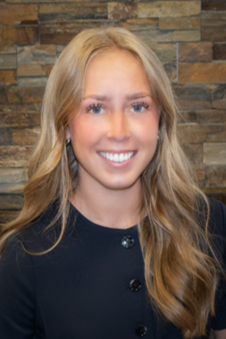
Katie is from Hays, Kansas, and began her undergraduate studies at Kansas State University in the fall of 2023. She discovered her passion for financial planning after switching majors her freshman year to Personal Financial Planning. To complement her undergraduate degree, Katie plans to graduate with a minor in Business and Gerontology. On Campus, Katie enjoys building connections with her peers in organizations such as the Financial Planning Association, Women in Business, and working as a Content Tutor for K-State Athletics. Outside of campus, she finds fulfillment in giving back to the Manhattan community by volunteering as an assistant coach for Girls on the Run, mentoring elementary school girls twice a week. In her free time, Katie enjoys reading books of all kinds, running, and trying every coffee shop in the Little Apple. Above all else, Katie’s faith and community encourage her to push herself and take hold of new opportunities.
Connect with Katie on LinkedIn.
Leah Meek- Junior
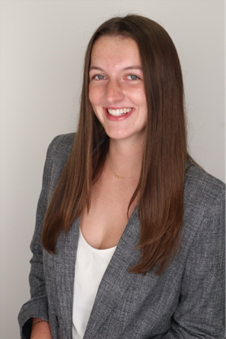 Leah graduated from high school in Topeka, Kansas, and began school at Kansas State University in the Fall of 2023. After switching to the Personal Financial Planning major in the spring of her freshman year, she decided to supplement her bachelor’s degree with minors in Gerontology and Business, gerontology being one of her passions. Leah found her place as an active student on campus, involved in a variety of organizations. She has served as the Vice President for Alpha Xi Delta, Member-At-Large for the Financial Planning Association, Secretary for Invest-A-Cats, Vice President of Health and Safety for the Panhellenic Council, and a peer mentor for the Personal Financial Planning program. Outside of her extracurriculars, she finds rich joy in music, an active lifestyle, engaging in conversations, and is an extreme espresso fanatic. One thing that remains constant throughout her life is her desire to live in faith, deepen community, and pursue personal development.
Connect with Leah on LinkedIn.
Investing in Students
Strengthening the Future of Financial Planning
Strong financial planning professionals do not develop by accident. They are shaped through education, mentorship, hands-on learning, and a community that believes in their potential. At Kansas State University, the Personal Financial Planning program is preparing students to become thoughtful, skilled, and compassionate professionals who will one day guide individuals and families through some of life’s most important financial decisions. That preparation requires more than strong coursework alone. It also depends on meaningful opportunities that help students build confidence, connect with the profession, and grow into the kind of practitioners clients can trust.
That is why financial support matters.
When alumni, professionals, families, and friends invest in the program, they help create experiences that extend beyond the classroom. Their support opens doors for students, strengthens their preparation, and reinforces the idea that this profession is one worth investing in. Gifts help expand access to opportunities that shape students academically, professionally, and personally, while also strengthening the future of financial planning as a whole. Just as important, support sends a powerful message. It tells students that professionals in the field believe in them, want them to succeed, and are willing to invest in their future.
As we reflect on the many people who help strengthen our program, we are especially grateful to highlight Dave Mirabito. His generosity, encouragement, and commitment to our students reflect the kind of investment that helps shape the next generation of financial planning professionals. Dave’s example reminds us that giving back can take many forms, and we hope his story inspires others to consider how their own support can help open doors for future students.
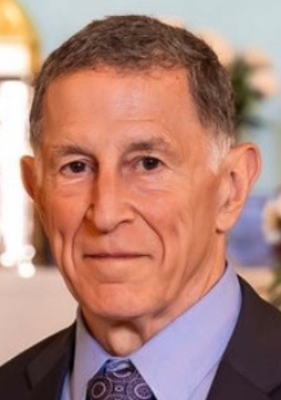
Dave Mirabito is a senior financial services executive with the Mirabito Financial Group in New York and a longstanding supporter of the Kansas State University Personal Financial Planning program. After earning his accounting degree from Le Moyne College, Dave began his career in New York City before discovering his passion for financial planning. He joined MetLife in 1992 as a licensed agent and later returned to central New York, where he built his own practice and dedicated his career to helping clients protect and prosper in their financial lives. He later earned the CFP® certification and a Master of Science in Financial Services from The American College of Financial Services.
Dave’s impact on the program has been meaningful and lasting. Through scholarship support, a faculty award, mentorship, and personal encouragement, he has helped create opportunities for students while also strengthening the broader program. His generosity reflects a deep belief in opening doors for others and in helping the next generation of financial planners move forward with confidence.
“My original inspiration to connect with Kansas State was my great admiration for HOF coach Bill Snyder. I promised to donate money to the financial planning program if I could get an autographed picture of the coach for my office (I now have two!). When I first visited and met your students, I learned that so many of them had a great desire to learn and a great curiosity about the profession. I also noticed a very caring and extremely competent faculty that gave time out of their professional or research responsibilities to share their knowledge and experience. They were supported by a helpful and friendly administrative staff.
Even in my darkest times, I’ve always believed that after you reach a given level in your own life, however you define it, the best thing you can do is to help others. For many students, they may feel a financial burden; they are anxious to prove themselves, yet unsure of how they will financially survive, much less flourish. I remember my student years. Even with partial scholarships, a little extra money can relieve a lot of tension and pressure. Perhaps most rewarding to me was meeting one of the first scholarship recipients and how much she struggled financially … my small gift made a huge difference to her. Very simply stated, I believe that “paying it forward” will always come back to me in a positive way.
In the words of the great college basketball coach John Wooden: 'Every day, do a favor for someone who can never repay you.' To be part of a best-in-class university program means a great deal to me. KSU PFP occupies a very special place in my heart.“
Closing Call to Action
We are incredibly grateful for the alumni, professionals, families, and friends who continue to strengthen the Kansas State University Personal Financial Planning program through their support.
Gifts of every size make a difference. Whether you choose to give in a large way or a small one, your generosity helps expand opportunities for students and strengthens the future of the profession. When combined with the support of others who care about this work, even modest gifts can have a meaningful impact.
If you believe in investing in students, in their education, and in the future of financial planning, we invite you to join us. Your support helps us continue building a program that prepares thoughtful, capable, and compassionate professionals who will go on to serve others well.
Thank you for being part of this community and for considering how you might make a difference! If you’re interested in finding out how you can impact our students and program, please reach out to Megan McCoy.
Closing Remarks
The spring semester has come to a close, and once again, our students have wrapped up finals, celebrated accomplishments, and prepared to step into summer opportunities. As the pace on campus slows, we take a collective breath and reflect on the last several months in this newsletter and all that has been achieved. Time and again, we are reminded of the excellence of our students, and of the strength of the village and community that is you, our alumni and friends.
Your time, advocacy, expertise, and generosity continue to enrich the K‑State Personal Financial Planning experience and play a meaningful role in why our students value this program so deeply. That pride carries forward as they encourage friends, family, and professional networks to join PFP. If you are looking for ways to stay engaged, we are always seeking mentors, guest speakers, scholarship donors, and partners who help support the continued growth and success of our students.
Alumni Professional Designation Opportunity
K-State Personal Financial Planning undergraduate and graduate alumni can now count their CFP® coursework toward additional designations through The American College of Financial Services. Alumni may pursue the ChFC® with only one additional course, or the CLU® and RICP® designations with only two additional courses. Learn more about this opportunity and continue building your professional credentials through the American College of Financial Services, or email Scott Harr.
Is your high schooler starting to explore colleges? Schedule a Campus Visit TODAY...
Prospective students have several opportunities to visit the campus and meet with program representatives. Explore K-State and the Personal Financial Planning program by scheduling a Campus Visit!
Donate
Support student success by giving to our Personal Financial Planning Excellence accounts through the K-State Foundation. Your gift enhances student events, engagement, and facilities at both Manhattan and Olathe campuses. Donate today and make an impact!
Interested in joining the College Professional Mentor program?
Are you interested in mentoring our students? The College of Health and Human Sciences provides a Professional Mentor Program for the students, pairing firm and industry individuals with students wanting a more in-depth understanding of the profession or area they seek to work in. If interested in learning more about being a mentor, please visit the mentor webpage or email the College of Health and Human Sciences Career Development Coordinator.
Do you have a job or internship you want us to share with our students?
If you want to promote an opportunity to our Personal Financial Planning students for an upcoming summer internship or post-graduation job, please let us know.
Follow Personal Financial Planning Socials: LinkedIn
 Instagram (@kstatepfp)
 Facebook